Bio Lighting in Banking Offices
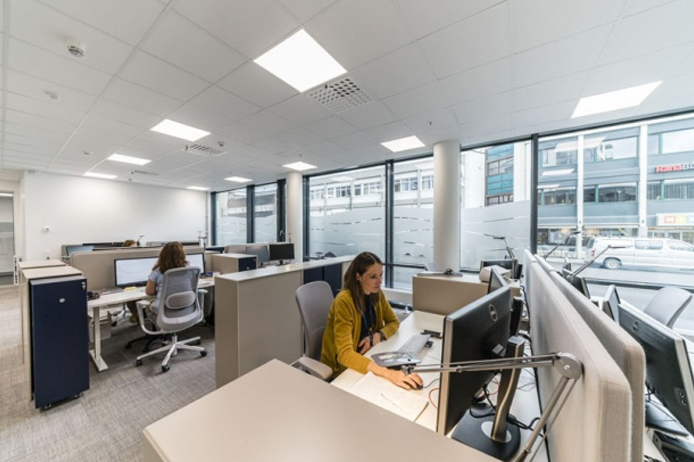
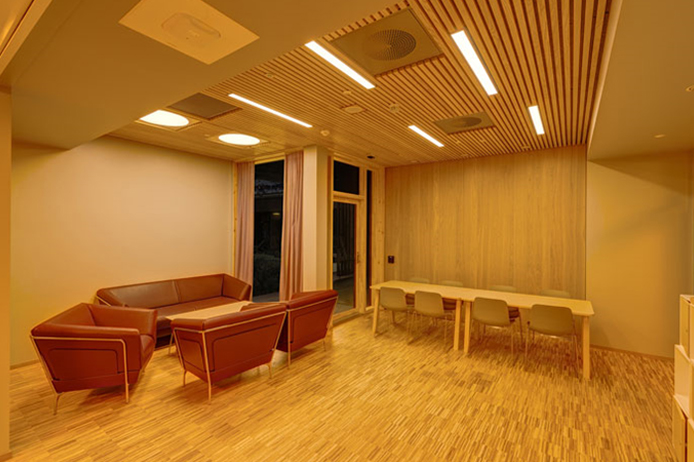
The SpareBank Nord-Norge branch office – just 50 miles (80 kilometres) south of the Arctic Circle – is one of the first banks in Europe to install so-called human-centric lighting. The human-centric lighting at this particular Norwegian bank delivers an ultra-cool 800-lux ‘focus’ boost to employees every day. It’s hoped that the dynamic lighting will reduce ‘Polar night depression’ for daylight-starved residents of extreme northern regions.
The light programme is as follows: Early morning: 450 lux warm white. Late morning: 800 lux, cold white. Lunchtime: 450 lux warm white. Early afternoon: 800 lux, cold white. Late afternoon: 450 lux warm white. The lighting mimics daylight by changing intensity and colour temperature throughout the day to improve concentration, prevent sleeping disorders by helping to set occupants’ sleep-wake cycles and provide an enhanced sense of wellbeing. “Between five and 10 per cent of the population struggles with Polar night depression,” the bank’s technical boss Øystein Eikrem explained. “This leads to dejected humour, low level of energy, diminished motivation and constant fatigue. These annoyances can be reduced with the right lighting, and therefore human-centric lighting is even more important for us who live in a country with a long winter.”
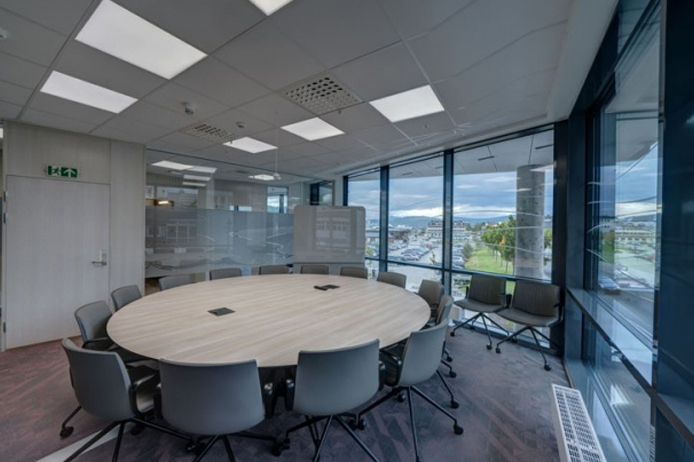
The lighting system in the team rooms for the 36 employees are pre-set according to a fixed day cycle. In the morning when the staff arrive at work, the lighting is warm white. After a while the lighting shifts to cold white and lighting intensity is increased to 800 lux, before it is lowered again, and turning warmer towards lunchtime. After lunch the blue-white tones increase again, before they decline towards the end of the day, and the warm white light becomes more prominent. In the meeting and quiet rooms it is possible to adjust the light in three categories – normal lighting (4000 kelvin, 500 lux), calm lighting (3000 kelvin, 500 lux) and focus lighting (6000 kelvin, 800 lux), as required.
“Several research reports, including from the Netherlands and Norway, reveal positive results from use of human-centric lighting in office environments and schools respectively. This is new and – to say the least – exciting. If human-centric lighting can result in enhanced wellbeing, and a decline in sick leave, then it’s a win-win situation for everyone,” the technical boss explained. “Even though It is still light outside, we can’t wait to see what it will be like when the days start to darken”, says bank branch manager Tor Magnet Aanonli. “Our most important resources are the people who work in the bank. Then we must organise it so that they have the best conditions. Not just inviting, pleasant work environments, but we must also implement the best technological arrangements for them that includes future oriented lighting. It also promotes a more enjoyable experience for those visiting the bank. We are waiting in anticipation to see how much job satisfaction improves and how much sick leave declines, as we believe it will.”
Bio Lighting in Mental Health Hospitals
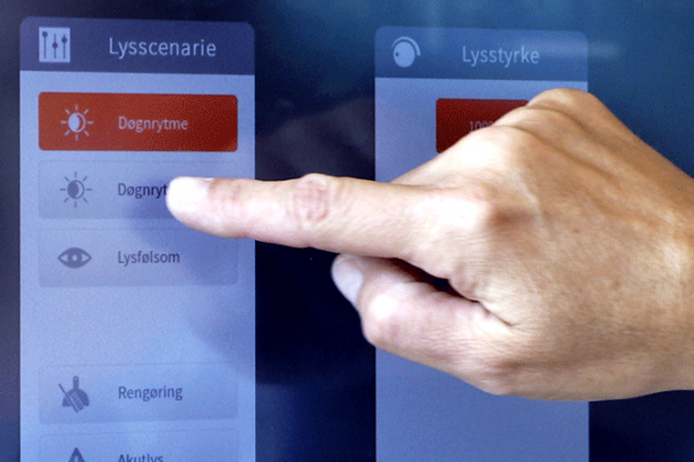
Customised lighting has been installed in a Danish psychiatric hospital in a bid to cut aggressive behaviour and conflicts between patients and staff. The sophisticated dynamic circadian lighting system is now operational at the Esbjerg Psychiatric Hospital, 200 kilometres west of Copenhagen. The installation consists of 101 patient rooms with central wards that acts as a control room in which the light can be controlled. Each control room can adjust the colour temperature, colour and illuminance of the lighting in relation to each patient and their specific requirements.
From here it is possible to switch between circadian light, emergency light and coloured lights. The lighting has a major human-centric element to stimulate the staff and patients’ circadian rhythm. Feedback says it is already assisting staff and patients to sleep better at night and boosting their well-being in the daytime.
It also enhances security for both staff and patients. The light is tuned to create a calming effect and help minimise the risk of aggressive behaviour and conflicts between patients and staff. Other projects with full dynamic circadian lighting have shown that the staff finds it easier to fall asleep after evening or night shifts compared to working under standard white lighting conditions.
Bio Lighting in Care Homes
A lighting installation at a care home in Denmark is using tuned light in an attempt to manage serotonin and melatonin levels in elderly patients. The project – one of the largest so-called ‘human centric’ lighting installations in Europe – covers 120 assisted living facilities at the Marienlund Care Centre in the municipality of Silkeborg.
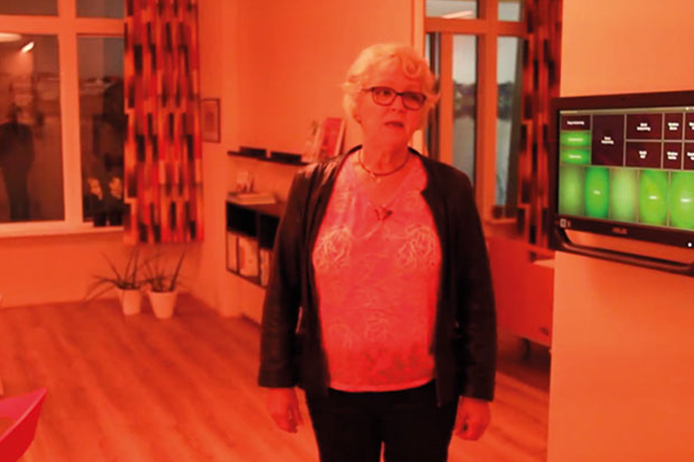
The pilot project consists of the construction of a ‘future care home’ with a range of innovative technologies to improve the welfare and wellbeing of the elderly residents. The full dynamic circadian lighting is programmed to stimulate circadian rhythms, and is tuned to each patient’s individual needs such as visual disabilities and sleep problems.
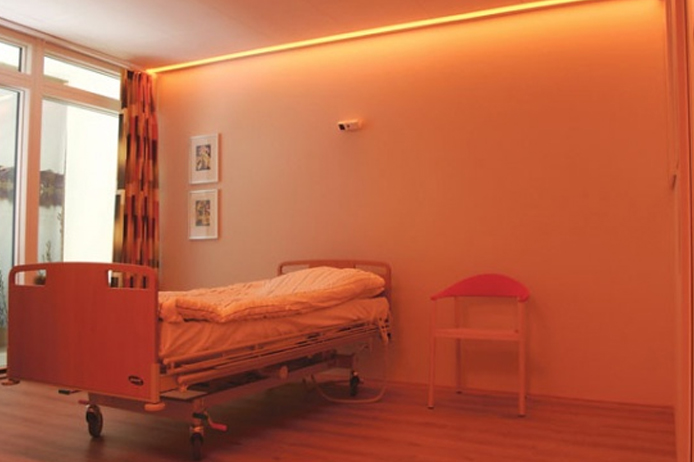
By removing the blue and delivering a red-orange light in the evening, the tuned lighting creates the optimal conditions for the production of melatonin to ensure effective sleep in the patients. The fully automatic light protocol is designed to boost with the most effective wavelengths of light to stimulate the brain to produce the ‘happiness hormone’ serotonin, as research shows that it has an effect in reducing the symptoms of seasonal affective disorder.
In the evening and at night the strength, wavelength and colour temperature is regulated to make the body produce the vital sleep hormone melatonin, which is produced during effective sleep. The circadian lighting is custom-designed for the healthcare sector, and features a combination of red, green, blue, warm white, cool white and amber LEDs.
In the morning the boost and therapy function helps to activate the body. From the morning the light gradually rises to high intensity and high colour temperatures. The blue light helps to inhibit the production of melatonin and stimulates the production of serotonin and cortisol. In the evening the custom evening and night light helps to create optimal conditions and prepare the body for a good night’s sleep. By removing the blue and using a red-orange light into the evening it creates the optimal conditions for the production of melatonin.
The red-orange light meanwhile helps creating a secure and tranquil environment for residents and patients. The staff are also affected by the light, and report that they find it easier to fall asleep after night shifts.
Speak to a Lighting Specialist
Our specialist team of Lighting experts would love to speak to you today about your project.
Please call +44 (0) 1223 874 434 or visit our specially designed showroom to see our products.
© Natural Lighting
Registered in the UK
0575 4924
Natural Lighting Showroom
The Light Unit, 1a & 2a Button End, Harston, Cambridge, CB22 7GX
Showroom Openings
Monday to Friday • 9am – 5:30pm
Visit’s by appointment. Please call prior to your visit.
Website: CAMBITION